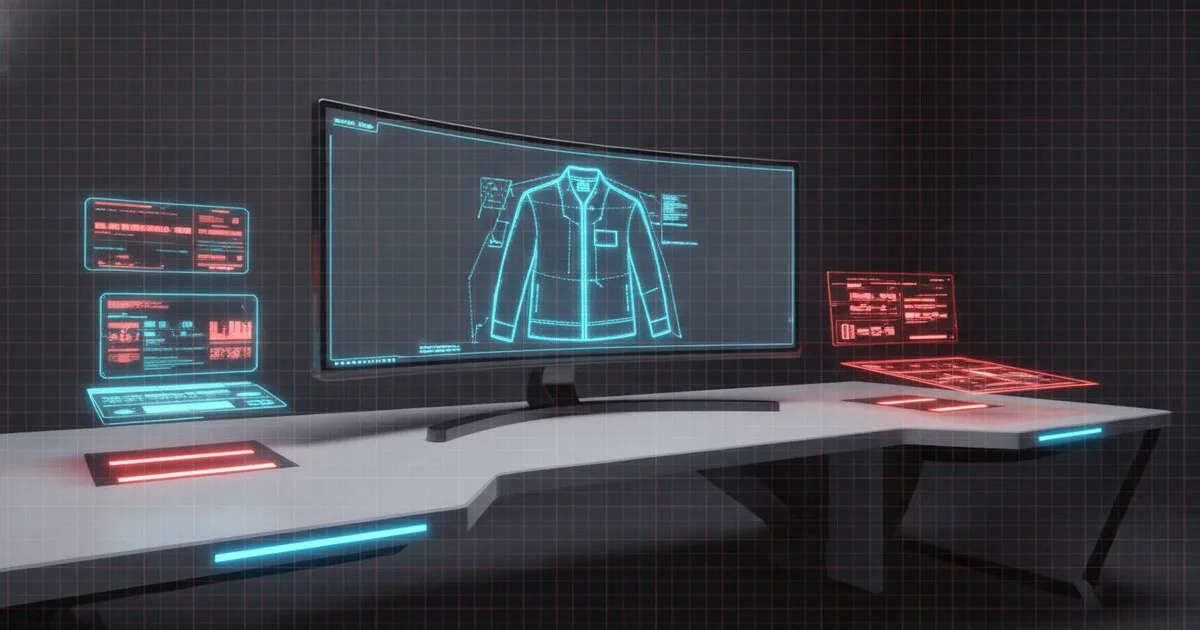
You are losing hours to broken PDF links, manual data entry, and the inevitable "version hell" of static spreadsheets. Digital tech pack software solves this by centralizing bill of materials (BOM), measurement tables, and sketches into a single, cloud-based source of truth that updates in real-time. This transition is no longer optional for brands looking to maintain margins in a high-speed production environment.
Key takeaways
- Digital tech packs reduce sample lead times by up to 20% by eliminating manual data re-entry across departments.
- Cloud-based tools allow for modular "bricks" of data, enabling designers to reuse validated measurements and construction details across multiple styles.
- Integration between standalone spec tools and enterprise suites ensures that costings and sourcing data flow directly from the design room to the factory floor.
- Manual PDF specs still persist in small-batch artisanal production, but they are becoming a liability for any brand scaling beyond ten styles per season.
Why are you still using Excel for garment specs?
If you are still building tech packs in Excel or Google Sheets, you are managing a document, not a product. In the current 2026 market, the complexity of global sourcing requires data that is dynamic. When a trim supplier changes or a measurement is graded incorrectly, a static spreadsheet requires you to manually update every related file. This is where human error thrives.
Industry reports from Sourcing Journal highlight that communication errors in the spec phase account for nearly 30% of factory rejects. By moving to a dedicated digital environment, you ensure that when a "card" or a "component" is updated, that change reflects across every tech pack using that specific trim or stitch detail. You are building a library of intelligence rather than a folder of dead documents.
How does Techpacker streamline the prototyping phase?
For many technical designers, Techpacker has become the go-to middle ground between a messy spreadsheet and a heavy enterprise system. It operates on a card-based system. Instead of viewing a tech pack as a single long page, you view it as a collection of modular cards: one for the fabric, one for the labels, one for the POMs (Points of Measure).
This modularity is critical when you are in the prototyping phase. If your fit model changes or a specific construction method fails during the first sample, you update the card once. You don't have to hunt through five different tabs to ensure the change was reflected. This tool is particularly effective for small-to-mid-sized teams that need to move fast without the overhead of a full IT implementation. It allows you to invite factory partners directly into the platform, where they can leave comments on specific cards, effectively turning the tech pack into a live conversation.
Can a digital spec sheet actually talk to Centric PLM?
As your brand scales, the need for a more robust backbone becomes apparent. This is where enterprise solutions like Centric PLM, now part of Dassault Systèmes, come into play. While a tool like Techpacker is excellent for the granular design and fit process, an enterprise PLM (Product Lifecycle Management) system manages the entire ecosystem—from initial concept and line planning to retail allocation.
In 2026, the "digital thread" is the goal. You want your tech pack data to flow into your PLM without manual intervention. Large enterprises use these systems to track the environmental impact of every button and zipper, calculate real-time margins based on fluctuating shipping costs, and manage thousands of SKUs. The spec sheet is no longer an island; it is the data foundation for the entire business. If your tech pack software doesn't have an API or a native connector to your PLM, you are creating a new silo that will eventually break.
Is the investment in WFX or similar suites worth it for mid-sized brands?
For mid-market brands that have outgrown basic tools but aren't ready for the massive investment of a tier-one PLM, WFX offers a specialized alternative. Their platform bridges the gap between design-heavy tech packs and the operational needs of an ERP (Enterprise Resource Planning) system.
Mid-sized brands often struggle with the "messy middle"—they have too much data for Excel but not enough staff to manage a multi-million dollar software suite. WFX provides a structured environment where tech packs are linked to inventory and production tracking. This ensures that when a designer specifies a 22cm zipper, the warehouse knows exactly how many to order for the production run. It turns the tech pack from a design document into a procurement instruction.
The 2026 Landscape: From Sun Valley to Hong Kong
The demand for precision in digital specs is being driven by broader industry trends. In July 2026, reports on high-profile tech conferences noted a shift toward "quiet luxury" and highly technical, minimalist apparel that leaves zero room for fit errors. When the aesthetic is this precise, the tech pack must be flawless.
Recent industry gatherings, such as the major fashion tech show held in New York on July 28-29, 2026, emphasized that AI and 3D transformation are now standard. You cannot feed an AI or a 3D rendering engine a messy PDF and expect a usable result. These systems require structured data. Similarly, the June 2026 exchange in Hong Kong focused on seamless updates across the supply chain. The consensus is clear: the tech pack is the "source code" of the garment. If the code is buggy, the product will be too.
Comparison: Digital Spec Tools vs. Enterprise PLM
| Feature | Standalone (e.g., Techpacker) | Enterprise PLM (e.g., Centric) | Hybrid ERP/PLM (e.g., WFX) |
|---|---|---|---|
| Best For | Emerging brands & indie designers | Global conglomerates | Mid-market manufacturers |
| Setup Time | Hours to days | Months | Weeks |
| Key Strength | Ease of use; card-based modularity | End-to-end lifecycle visibility | Production and inventory sync |
| Primary Limit | Limited financial/ERP features | High cost and complexity | Steeper learning curve for designers |
How to transition from PDF to a live data environment
Moving your workflow into a digital tech pack environment requires a systematic approach. You cannot simply upload your old PDFs and expect the software to do the work for you.
What you need
- A clean library of your standard POMs (Points of Measure).
- High-resolution digital sketches (vector format preferred).
- A verified list of your current suppliers and their contact details.
- Internal agreement on naming conventions for materials and colors.
Implementation Steps
- Audit your current specs: Identify the most common errors in your existing PDF tech packs. Is it the grading? The BOM? Focus on fixing these during the migration.
- Componentize your library: Break your garments down into "bricks." Create standard cards for your core fabrics, labels, and construction methods that can be reused.
- Define the workflow: Decide who owns the data at each stage. Does the designer enter the BOM, or does the sourcing manager?
- Onboard your factory: This is the most critical step. Show your factory partners how to access the digital platform and ensure they understand how to flag issues within the software rather than via email.
- Iterate and refine: Use the first two styles as a pilot. Gather feedback from the factory on whether the digital format is clearer than the old PDF.
Where do manual spec sheets still dominate?
Despite the push for digitalization, manual spec sheets haven't vanished. In high-end couture and small-batch artisanal production, the human touch remains paramount. When a pattern is draped on a form and adjusted by hand for a single client, a rigid digital tech pack can feel like a hindrance. However, even these sectors are beginning to use digital tools for archiving. The risk of losing a physical pattern or a hand-written spec sheet to time or damage is simply too high. Even if the production is manual, the record-keeping is becoming digital.
In the mass market, however, the manual spec is a relic. The speed at which trends move—and the precision required for automated cutting and sewing—means that a digital tech pack is the only way to stay competitive. If you are still emailing PDFs in 2026, you are not just behind the curve; you are a bottleneck in your own supply chain.
FAQ
Can I use these tools for footwear and accessories?
Yes. While many tools were originally built for apparel, platforms like Techpacker and WFX have specific templates for footwear, bags, and jewelry. The logic remains the same: you are managing a bill of materials, a set of measurements, and construction instructions in a modular, digital format.
Do these tools replace Adobe Illustrator?
No. Most technical designers still use Illustrator for sketching. Digital tech pack software acts as a container for those sketches. Many tools offer plugins that allow you to sync your Illustrator artboards directly into the tech pack cards, ensuring your visuals are always up to date.
How do factories access digital tech packs?
Most modern platforms offer a "Vendor Portal." You grant the factory access to specific styles, and they log in to view the live data. They can download a PDF version if they need a physical copy for the sewing floor, but the digital version remains the master record.
What is the ROI on switching from Excel?
ROI is typically seen in three areas: reduced sample rounds (fewer errors), faster time-to-market (no manual data entry), and lower material waste. Most brands report that the software pays for itself within two seasons by eliminating one round of physical sampling per style.
Further reading
- How the Rich and Powerful Dress Right Now - The New York Times
- The Fashion Tech Show New York 2026
- The Fashion Tech Exchange Hong Kong 2026
- Browzwear
- WFX
- Centric PLM
- Marvelous Designer
- Techpacker
- Optitex