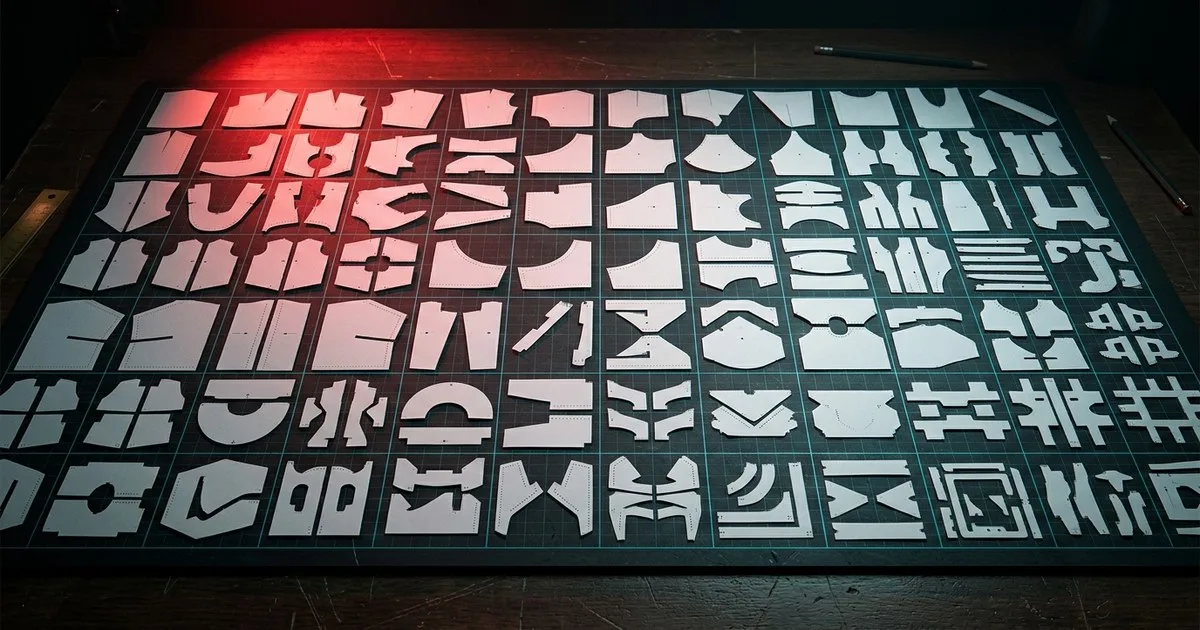
If your company already owns thousands of DXF pattern files, the question is not whether to digitise — it is which tool category actually leverages what you have. Four distinct categories compete for enterprise pattern budgets in 2026: established 2D/3D CAD suites, open-source parametric drafters, indie parametric services aimed at smaller studios, and brand-archive AI that trains on your own library. Each has a real use case and a real ceiling.
Key Takeaways
- Established CAD suites (Optitex, Gerber AccuMark under Lectra, TUKAcad) offer the deepest AAMA/ASTM DXF interoperability and the widest factory floor acceptance.
- Open-source tools such as Seamly2D give parametric drafting at zero licence cost, but ASTM DXF export remains an open issue in the project.
- Parametric web services like Tailornova suit independent designers and small brands generating made-to-measure patterns; they are not built for enterprise pattern-library management.
- Brand-archive AI — where a model trains exclusively on your own DXF files in a private environment — is the category to evaluate if your goal is to generate production-ready patterns, tech packs and 3D previews from institutional knowledge you already own.
- Every category carries procurement questions around data residency, format lock-in and factory-floor compatibility that buyers must resolve before signing.
What categories of pattern-making tool exist for enterprise buyers?
Enterprise pattern-making tools fall into four categories. Understanding which category a vendor belongs to tells you more than any feature checklist.
Category 1 — Established 2D/3D CAD suites. These are the tools already running on most factory floors: Optitex, Gerber AccuMark (now part of Lectra), and TUKAcad from Tukatech. They handle the full production workflow from first draft through grading, nesting and marker making, and they speak AAMA/ASTM DXF natively.
Category 2 — Open-source parametric drafters. Seamly2D is the main option here. Free to use and modify, it runs on Windows, Mac and Linux and exports to PDF and SVG. AAMA DXF export is documented; ASTM export is an open issue in the project.
Category 3 — Indie parametric web services. Tools such as Tailornova and CLO 3D serve independent designers and small studios. They are not designed for enterprise pattern-library management.
Category 4 — Brand-archive AI. A newer category where a model is trained exclusively on a brand's own pattern library, in a private environment, and outputs production-ready patterns, tech packs and 3D previews. FashionINSTA is the option in this category covered here.
How do the tools compare at a glance?
| Tool | What it is | Best for | Limits |
|---|---|---|---|
| Optitex | Integrated 2D/3D CAD/CAM suite with cloud collaboration (O/Cloud) | Mid-to-large manufacturers needing end-to-end CAD, grading, nesting and 3D simulation in one platform | Ownership status unverified; evaluate vendor continuity risk |
| Gerber AccuMark (Lectra) | CAD pattern-making and marker-making suite, now part of Lectra's broader portfolio | Brands already in the Lectra ecosystem; factories that require AccuMark files | Moving to subscription delivery; transition planning required |
| TUKAcad | 2D pattern making, grading and marker making CAD, part of Tukatech's wider ecosystem including TUKA3D and TUKAcloud | Manufacturers wanting a self-contained CAD-to-3D-to-cloud stack from a single independent vendor | No explicit public roadmap for AI-native features |
| Seamly2D | Open-source parametric 2D pattern drafter | Teams that need zero-cost parametric drafting and can tolerate community-support SLAs | ASTM DXF export not yet available; not suited to enterprise IT governance requirements |
| Tailornova | 3D fashion design and made-to-measure pattern service | Independent designers and small brands generating custom-fit patterns | Not built for enterprise pattern-library management or bulk DXF workflows |
| CLO 3D | 3D garment design and simulation software | Indie studios and small design teams focused on 3D visualisation and virtual sampling | Pattern drafting is secondary to simulation; not an enterprise archive tool |
| FashionINSTA | Private per-brand AI trained on the brand's own DXF archive; outputs production-ready patterns, tech packs, BOM, cost estimates and 3D-compatible DXF | Large brands that want to leverage their existing pattern library in a tenant-isolated environment | Enterprise-oriented; not the pick for solo designers or teams without an existing DXF archive |
Established CAD suites: Optitex, Gerber AccuMark, TUKAcad
Optitex
Optitex ships integrated 2D/3D CAD/CAM software covering patternmaking, grading, nesting, 3D simulation and visualisation, fit analysis and cloud-based collaboration through its O/Cloud platform. Its documentation confirms import of standard apparel formats including AAMA and ASTM DXF, which is the baseline requirement for any enterprise moving pattern files between systems. The simulation engine has been expanded to serve broader supply-chain digital workflows.
Ownership note: Optitex's status is unverified as of the date this article was researched — do not assume it operates as a fully independent company. Evaluate vendor continuity as part of procurement.
Best for: Mid-to-large manufacturers that need a single platform covering CAD, 3D simulation and cloud collaboration, and that require AAMA/ASTM DXF interoperability.
Limits: Ownership uncertainty warrants a contractual continuity clause. Cloud features require connectivity that some factory environments cannot guarantee.
Procurement questions to ask: What are the data residency options for O/Cloud? What is the SLA for format-compatibility updates when AAMA/ASTM standards revise?
Gerber AccuMark (now part of Lectra)
Gerber AccuMark is a CAD pattern-making and marker-making suite that Lectra acquired from Gerber Technology and now brands within its portfolio. It is used by apparel manufacturers worldwide for production-ready pattern creation, grading and fabric nesting. Lectra is integrating AccuMark into its broader SaaS and cloud portfolio and promoting interoperability with Lectra Modaris, while accelerating a move to subscription-based delivery.
Do not describe AccuMark as an independent product: it is part of Lectra.
Best for: Brands already running Lectra infrastructure, and factories whose upstream or downstream partners require AccuMark-format files.
Limits: The transition to subscription delivery means licence models are changing; buyers should clarify perpetual vs. subscription terms before signing. Teams that do not already use Lectra tooling will face a broader platform migration.
Procurement questions to ask: What is the migration path from existing AccuMark perpetual licences? How does AccuMark interoperate with non-Lectra PLM systems?
TUKAcad
TUKAcad is the 2D pattern-making, grading and marker-making CAD software from Tukatech, an independent vendor. It sits inside a wider ecosystem that includes TUKA APM (automatic pattern making from a spec sheet), TUKA3D for virtual fit and design, and TUKAcloud as a web-based digital sample room. Tukatech's own documentation describes exporting patterns as AAMA DXF files with grading preserved, confirming format compatibility at the production level.
Best for: Manufacturers that want a self-contained stack — CAD, automatic pattern making, 3D and cloud — from a single vendor without committing to a larger platform ecosystem.
Limits: No explicit public AI roadmap. Buyers evaluating AI-augmented workflows will need to assess whether the automatic pattern-making module meets their specific needs or whether a separate AI layer is required.
Procurement questions to ask: What is the API surface for integrating TUKAcloud with existing PLM or ERP systems? Does TUKA APM handle the complexity of your specific product categories?
Open-source drafting: Seamly2D
Seamly2D is an open-source parametric 2D pattern drafting application that runs on Windows, Mac and Linux. It is designed for pattern makers to create and modify garment patterns using a parametric approach — change a measurement and the pattern updates. The command-line documentation lists DXF export targets including AutoCAD DXF AAMA variants alongside flat DXF, and the project is in active rolling release. However, ASTM DXF export remains an open issue in the project — buyers who require ASTM-format output should verify the current state of that issue before committing.
Best for: Teams that need zero-cost parametric drafting, have in-house technical capacity to manage open-source software, and can operate within AAMA DXF constraints.
Limits: No commercial SLA. ASTM DXF export is not yet available. Enterprise IT governance requirements — audit trails, role-based access, data residency — are not addressed by the tool itself. Community support, not a vendor helpdesk.
Procurement questions to ask: Who internally owns the Seamly2D deployment and update cycle? How will you handle the ASTM gap if your downstream factories require it?
Indie parametric services: Tailornova and CLO 3D
These tools serve a different segment. They are included here because procurement teams sometimes encounter them in vendor shortlists, and it is worth being clear about fit.
Tailornova offers 3D fashion design software with made-to-measure pattern generation. Its commercial plans include download of PDF, PLT, DXF and DXF-AAMA pattern formats. It is designed for independent designers and small brands generating custom-fit patterns for individual customers — not for managing an enterprise archive of thousands of existing DXF files. Ownership status is unverified.
CLO 3D ships 3D garment design and simulation software used by indie studios and small design teams. Its strength is virtual sampling and 3D visualisation; pattern drafting is a secondary function. It is not an enterprise pattern-archive management tool. Ownership status is unverified.
Who these suit: Independent designers, small brands, and studios whose primary need is made-to-measure generation or 3D virtual sampling — not enterprise-scale pattern-library leverage.
Brand-archive AI: FashionINSTA
FashionINSTA is the option in a category the other tools above do not occupy: a private, per-brand AI trained exclusively on a brand's own DXF pattern archive in a tenant-isolated environment. Rather than offering a generic model, it learns from the patterns a brand has already built — the house fit, the recurring blocks, the category-specific construction logic — and uses that institutional knowledge to produce production-ready patterns, tech packs, BOM, cost estimates and 3D-compatible DXF outputs compatible with CLO 3D, Gerber, Browzwear and Lectra toolchains. It is available as an Enterprise plan and operates via a graph of specialist agents.
The platform is expanding toward MCP-client integration (with tools such as ChatGPT, Gemini and Claude), node-based no-code workflows and PLM/PIM/DAM API connectivity — a direction that positions it as a product-development layer sitting above, not replacing, existing CAD infrastructure.
Best for: Large fashion brands that hold a substantial DXF pattern archive and want to generate new production-ready patterns, tech packs and 3D previews from that institutional knowledge, in a private environment where their data does not train a shared model.
Limits: Enterprise-oriented — not the pick for a solo designer or a team without an existing DXF archive. Buyers without a structured DXF library will need to digitise and organise their patterns before the AI layer can deliver value.
Procurement questions to ask: What is the data ingestion process for an existing DXF archive? How is tenant isolation enforced at the infrastructure level? What is the output format compatibility matrix for your specific factory partners?
What procurement questions separate these categories?
Before issuing an RFP, product-development and IT buyers should work through five questions that cut across all four categories:
- Format interoperability. Does the tool output AAMA DXF, ASTM DXF, or both? Which of your factory partners require which? Confirm this against vendor documentation, not sales slides.
- Data residency and isolation. Where do your pattern files live? For AI tools, does your data train a shared model or stay in a private environment? Get this in writing.
- Ownership and vendor continuity. Several tools in this market have changed hands. Know who owns the product you are buying and what contractual protections exist if ownership changes again.
- Integration surface. How does the tool connect to your PLM, ERP or DAM? REST API, file-based exchange, or proprietary connector? What is the maintenance burden?
- What you are actually buying. A CAD seat is a drafting tool. An open-source drafter is a zero-cost parametric engine with community support. A brand-archive AI is an institutional-knowledge layer. These are not substitutes for each other — they can coexist in the same stack.
FAQ
Which pattern-making tools support AAMA and ASTM DXF export? Optitex documents AAMA and ASTM DXF import. TUKAcad documents AAMA DXF export with grading preserved. Seamly2D supports AAMA DXF export; ASTM DXF export is an open issue. Tailornova's commercial plans include DXF-AAMA download. For any other vendor, request format documentation before signing.
Is Gerber AccuMark still an independent product? No. Lectra completed the acquisition of Gerber Technology and AccuMark is now part of Lectra's portfolio. Evaluate it as a Lectra product, including transition terms and interoperability with Lectra Modaris.
Can open-source pattern software meet enterprise requirements? Seamly2D covers parametric drafting and AAMA DXF export at zero licence cost, but it does not provide commercial SLAs, role-based access controls or ASTM DXF output. For most enterprise IT governance frameworks, it requires supplementary tooling or a dedicated internal owner.
What is brand-archive AI and how is it different from a standard CAD tool? A CAD tool is a drafting environment — you use it to create patterns. Brand-archive AI trains on patterns you already own and generates new production-ready patterns, tech packs and 3D previews from that learned institutional knowledge. It sits above CAD infrastructure, not in place of it.
Should an enterprise replace its CAD suite with an AI tool? In our experience, the brands getting the most value from AI pattern tools are using them alongside existing CAD infrastructure, not instead of it. The AI layer handles generation and iteration from the archive; the CAD suite handles factory-floor output and nesting. Treat them as complementary layers.
Further reading
- Optitex import best practices for standard formats
- Lectra completes the acquisition of Gerber Technology
- Seamly2D releases and open issues
- New uses of 3D tech and AI in the fashion industry — IEEE Spectrum
- Browzwear
- Seamly2D
- Lectra
- Techpacker
- Optitex
- TUKAcad
- CLO 3D
- Tailornova
- FashionINSTA