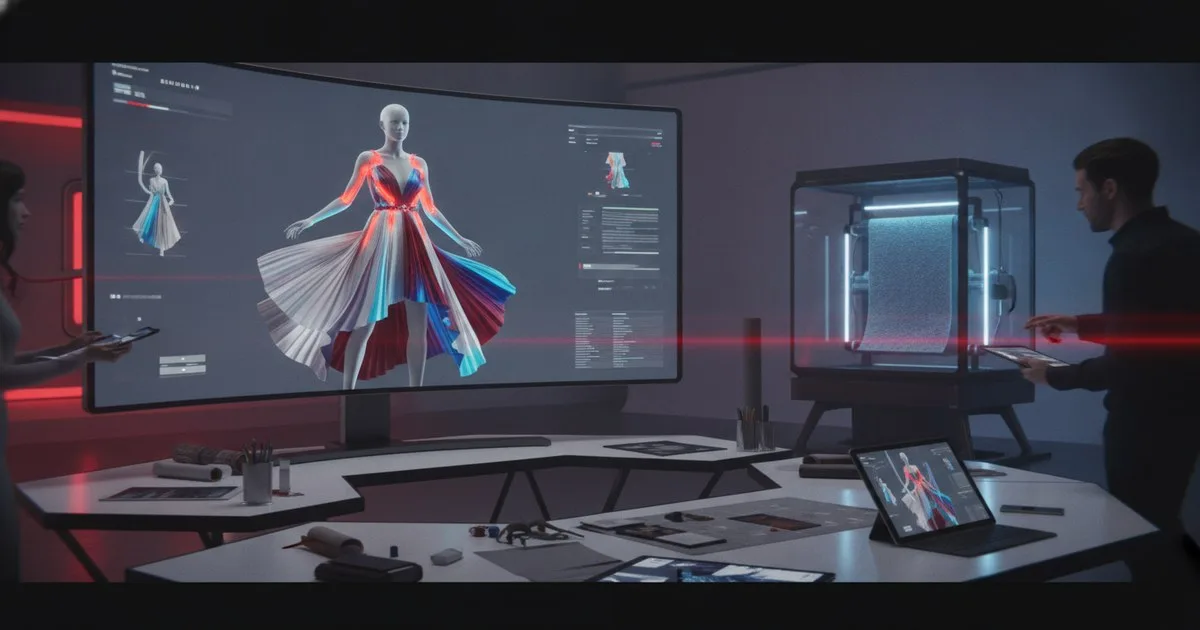
Digital Product Creation (DPC) is no longer a futuristic concept; it is the current standard for brands aiming to survive a hyper-accelerated market. By replacing multiple rounds of physical prototypes with high-fidelity 3D simulations, companies are reducing development calendars from months to weeks. This shift allows for instantaneous design iterations, significantly lower shipping costs, and a more sustainable approach to garment construction.
Key takeaways
- 3D sampling can reduce the traditional 4-to-6-week prototype cycle to as little as 48 hours for design approval.
- Leading brands report a 60% to 80% reduction in the number of physical samples required before production.
- Digital twins enable accurate tension maps and fabric drape simulations, minimizing fit errors before the first fabric is cut.
- Successful implementation requires an "AI-native" business shift rather than just a software update to existing legacy workflows.
- Physical sign-off remains necessary for final tactile fabric verification and complex trim testing.
How does 3D sampling work in a real-world workflow?
The transition to a 3D-first workflow begins with the 2D pattern. Unlike traditional sketching, digital sampling requires a production-ready CAD pattern as the foundation. This pattern is imported into a 3D environment where it is "sewn" onto a digital avatar (mannequin) that matches the brand’s specific fit model dimensions.
Browzwear, a prominent player in this space, utilizes its VStitcher platform to allow designers to visualize how different fabrics will behave on the body. The software calculates the physical properties of the cloth—such as weight, stretch, and bend—to create a digital twin that reacts to movement. This allows product managers to identify issues like pulling at the seams or excessive fabric at the waist without ever sewing a physical garment.
Once the digital garment is created, it can be shared across the supply chain. Instead of shipping a physical sample from a factory in Vietnam to a design office in New York, the factory sends a digital file. The design team reviews the 3D render, makes adjustments to the pattern or colorway in real-time, and sends the updated file back instantly.
What are the measurable benefits for product development managers?
For sourcing and development managers, the primary metric is the reduction of the "sample-to-production" ratio. In a traditional setup, a single style might require three to five physical samples (proto, fit, sales, and pre-production). Each round involves fabric sourcing, cutting, sewing, and international shipping, often taking two weeks per iteration.
Hugo Boss has been a vocal proponent of this shift, integrating digital product creation into its core strategy to enhance agility. By utilizing digital showrooms and 3D prototypes, the brand can present entire collections to wholesale buyers before a single piece of clothing is manufactured. This "sell-before-you-make" model reduces overstock and ensures that production is aligned with actual market demand.
Measurable impacts include:
- Cost Savings: Elimination of air freight for multiple sample rounds and reduced material waste.
- Speed to Market: Ability to react to trends within a single season rather than planning 12 months in advance.
- Sustainability: A significant reduction in the carbon footprint associated with the sample manufacturing process.
Where does the digital process still require physical sign-off?
Despite the accuracy of modern 3D tools, certain elements of the garment lifecycle still demand a physical touchpoint. Industry experts frequently note that while 3D is perfect for silhouette and proportion, it cannot yet fully replace the "hand-feel" of a textile.
Physical sign-off is typically still required for:
- Tactile Fabric Approval: Confirming the softness, texture, and weight of a new seasonal fabric.
- Complex Trims and Closures: High-performance zippers, intricate embroidery, or heavy embellishments can be difficult to simulate with 100% accuracy regarding their weight-impact on the garment's drape.
- Final Production Fit: Most brands still insist on one final physical sample on a live fit model to ensure comfort and movement that an avatar might miss.
Which software tools are currently leading the market?
The choice of software often depends on the complexity of the patterns and the existing technical stack of the brand. While some tools focus on the artistic side of design, others are deeply rooted in the technicalities of pattern making.
| Tool | Best For | Limits |
|---|---|---|
| Browzwear VStitcher | Enterprise-level technical design and true-to-life fabric simulation. | Steeper learning curve for non-technical designers. |
| Optitex | Brands with heavy 2D CAD requirements and complex pattern grading. | Simulation visuals are often seen as less "photorealistic" than competitors. |
| CLO 3D | Fast design iteration and creative visualization. | Integration with some legacy PLM systems can be complex. |
How do you transition a design team to a 3D-first mindset?
Transitioning to DPC is not merely a technology change; it is a fundamental business change. As noted in recent industry analysis regarding the shift toward AI-native structures (August 11, 2026), simply "sprinkling" new tech onto old, siloed processes often leads to failure.
To succeed, brands must:
- Upskill Existing Staff: Traditional pattern makers (modellisti) must learn to navigate 3D environments, while designers must understand the constraints of 2D patterns.
- Standardize Digital Assets: Create a centralized library of digital fabrics (U3M files) and trims that are pre-validated for physics and color accuracy.
- Incentivize Suppliers: Factories must be equipped to receive and edit 3D files. According to reports from Sourcing Journal, the biggest bottleneck in DPC adoption is often the lack of digital literacy at the manufacturing level.
What can go wrong during the 3D implementation phase?
The most common pitfall is the "dual-track" trap, where a brand attempts to run a full 3D workflow while still demanding the same number of physical samples as before. This doubles the workload for the development team and leads to burnout.
Another issue is data integrity. If the fabric properties (stretch, weight, thickness) entered into the software do not match the actual physical fabric, the 3D simulation will be a lie. This results in garments that look perfect on screen but fail during production. Brands must invest in fabric testing hardware to ensure the digital twin is an honest representation of the physical material.
Conclusion: The Path Forward
3D sampling is the cornerstone of a modern, responsive fashion supply chain. By cutting weeks out of the development cycle, brands can move closer to a demand-driven model that reduces waste and increases profitability. However, the technology is only as good as the data and the people behind it. For product development managers, the goal is to move beyond the "pilot phase" and integrate these tools into a seamless, digital-first pipeline that recognizes where the computer ends and the human touch must begin.
FAQ
How much time does 3D sampling actually save? On average, brands save 2 to 3 weeks per sampling round. For a typical development cycle with three rounds of prototypes, this can shave nearly two months off the total calendar, allowing for much later trend-spotting and decision-making.
Do we still need physical samples at all? Most brands still produce one "Gold Sample" or pre-production sample. This serves as the legal and quality benchmark for the factory. However, the 3-5 intermediate "fit" samples are increasingly being eliminated entirely through 3D validation.
What software is required for digital product creation? Common industry standards include Browzwear VStitcher and Optitex for technical pattern-based 3D, and CLO 3D for design-heavy workflows. These are often integrated with a Product Lifecycle Management (PLM) system to track versions and metadata.
Can 3D samples be used for e-commerce? Yes. High-fidelity renders are increasingly used for "pre-tail" and e-commerce listings before production is finished. This allows brands to test market interest and even start selling items while the bulk production is still in transit.
Is the fit accurate enough for production? If the fabric physics are correctly tested and the avatar is accurately sized, 3D fit is highly reliable. However, it requires a disciplined approach to data entry. If the digital fabric data is estimated rather than measured, the fit accuracy drops significantly.