Heuritech is no longer an independent company. As of November 2024, it operates as a named brand inside Luxurynsight, a luxury data-intelligence group. If you are evaluating it as a forecasting vendor, that acquisition is the first thing you need to know — it shapes the product roadmap, the commercial relationship, and the long-term brand risk.
Key Takeaways
- Heuritech was acquired by Luxurynsight, effective November 2024; it is not a standalone vendor.
- The platform analyses social imagery across thousands of fashion attributes to produce trend forecasts up to 24 months ahead.
- Outputs ship as a SaaS platform, an API, and custom and market reports — consumed primarily by fashion and luxury brands.
- The combined group positions itself as the data-intelligence layer for luxury, fashion, and beauty.
- Several things remain genuinely unverifiable from outside: real-world accuracy across all categories, coverage depth for low-social-presence segments, and whether the Heuritech brand survives long term inside the group.
What did Heuritech become known for?
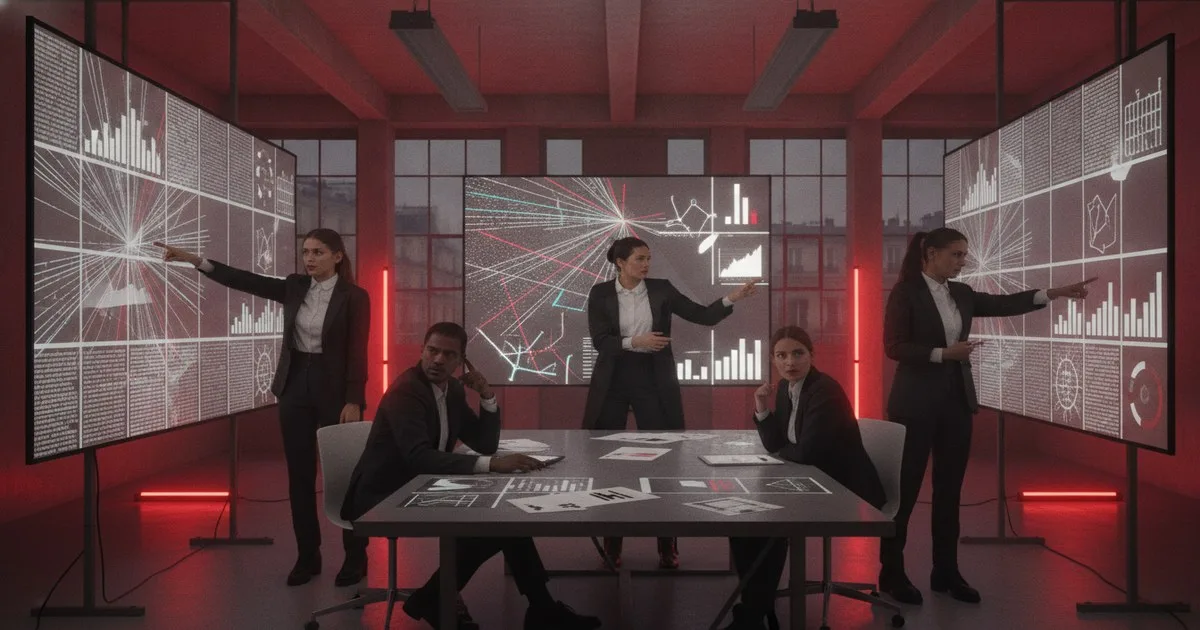
Heuritech built its reputation on a specific technical bet: instead of asking trend analysts to browse runways and editorial, it pointed computer-vision models at social media imagery and let them count. The idea was that the aggregate signal in millions of consumer posts — what silhouettes appear, what colours repeat, what accessories cluster together — contains a measurable leading indicator of demand.
The platform was designed to detect thousands of fashion attributes from that imagery and translate frequency and growth curves into quantified trend signals. That made it legible to planners and merchandisers, not just trend teams. Brands could attach a number to an intuition rather than defend a mood board in a buying meeting.
That positioning — rigorous, data-backed, built for commercial teams as much as creative ones — is what attracted a client base across fashion and luxury before the acquisition.
What does Heuritech actually ship today?
Inside the Luxurynsight group, Heuritech continues to operate under its own name and ships three main output types.
The SaaS platform gives brand teams access to trend signals broken down by market, age group, gender, and consumer profile. Users can track how a specific attribute — a collar shape, a fabric texture, a colour family — is moving across geographies and demographics, and see a forecast curve rather than a static snapshot.
An API lets brands pipe trend data directly into their own planning or product-development tools, removing the need to context-switch into a separate interface.
Custom and market reports serve teams that want a curated, analyst-mediated view rather than raw platform access — useful for seasonal planning cycles or category-specific deep dives.
According to information published on the Luxurynsight site, the image-recognition technology analyses millions of social media data points across 2,000 attributes and produces forecasts up to 24 months in advance. The same source cites a 92% accuracy figure. That figure comes from Luxurynsight's own published materials — independent verification is not available, and the methodology behind it is not disclosed publicly, so treat it as a vendor claim rather than an audited benchmark.
The primary consumers of these outputs are fashion and luxury brands using trend intelligence to inform collection direction, inventory planning, and go-to-market timing. The demand-forecasting use case — reducing deadstock and markdown exposure by aligning production volumes with quantified trend signals — is one the platform addresses explicitly.
Who is the combined group serving, and where is it heading?
Luxurynsight runs a broader suite of SaaS products covering pricing intelligence, retail monitoring, brand desirability tracking, and news aggregation alongside trend prediction. Adding Heuritech's social-imagery capability extends the group's coverage of the consumer-facing signal layer — what people are actually wearing and posting — to sit alongside the market and commercial data already in the platform.
The stated direction, as the group describes it publicly, is to become the data-intelligence provider of record for luxury, fashion, and beauty. Heuritech's computer-vision capability is positioned as a core part of that ambition rather than a standalone acquisition that will be wound down.
For buyers, that means the commercial conversation now runs through Luxurynsight, and the product roadmap is set at group level. Whether that accelerates or constrains the trend-forecasting product depends on how the group allocates engineering and data resources — something that is not visible from outside.
What can you not verify from public sources?
This is the section most vendor profiles skip. For a business audience making a procurement decision, it matters.
Accuracy across categories. The 92% accuracy figure cited in Luxurynsight's published materials is not accompanied by a methodology note, a sample size, or a definition of what counts as a correct forecast. Social-imagery models perform differently across categories: a trend with heavy Instagram presence is easier to detect than one moving through wholesale channels or through demographics that post less. Brands operating in categories with thin social signal should ask specifically how the platform handles low-data environments.
Coverage of non-social demand signals. The platform's core input is social imagery. That is a strong signal for consumer-facing fashion, less so for categories where purchase intent does not travel through visual social media. Brands should test coverage against their specific categories before committing.
Long-term brand continuity. Heuritech is currently a named brand inside Luxurynsight. Whether it remains a distinct product with its own interface and roadmap, or is eventually folded into the group's unified platform under a different name, is not publicly stated. Contracts signed with 'Heuritech' today are contracts with the Luxurynsight group — buyers should confirm how that is handled in their agreements.
Revenue, headcount, and equity. None of these figures are publicly available for either Heuritech or Luxurynsight. Do not rely on any third-party estimate you encounter; none are sourced from verified disclosures.
How does this fit into the broader AI-forecasting vendor market?
The market for AI-assisted trend and demand forecasting in fashion has grown quickly, and buyers now face a range of tools with overlapping claims. A few distinctions are worth keeping in mind when comparing options.
Heuritech's differentiation is the social-imagery layer: it is not primarily a sell-through analytics tool or a buying-and-planning workspace. Tools like Style Arcade focus on assortment planning, product forecasting, and retail analytics — they work from internal sales and inventory data rather than external social signals. The two approaches answer different questions: one tells you what is moving in the market before it hits your shelves; the other tells you what is moving on your shelves and how to optimise around it. Many brands use both.
The McKinsey State of Fashion research has consistently flagged demand uncertainty and overproduction as structural problems for the industry. AI forecasting tools are one response to that pressure, but they are not interchangeable — the right choice depends on where your uncertainty actually lives: in reading external trend signals early, or in translating those signals into buying and inventory decisions.
FAQ
Is Heuritech still an independent company? No. Heuritech was acquired by Luxurynsight, effective November 2024. It operates as a named brand inside the group but is not a standalone entity. Any commercial agreement is with Luxurynsight.
What data does Heuritech use to generate forecasts? The platform analyses social media imagery using computer vision, detecting fashion attributes across millions of posts. It does not primarily use sell-through or point-of-sale data — that distinguishes it from retail-analytics tools.
How far ahead can the platform forecast? Luxurynsight's published materials state forecasts up to 24 months in advance. The methodology behind that horizon is not publicly disclosed.
What accuracy does the platform claim? A 92% accuracy figure appears in Luxurynsight's own published content. No independent audit or methodology note accompanies it; treat it as a vendor claim and ask for category-specific validation during a sales process.
Will the Heuritech brand continue to exist? It currently does, as a named product inside Luxurynsight. Whether it is eventually merged into the group's unified platform is not publicly stated and should be clarified in any contract negotiation.
Further reading
- Heuritech joins Luxurynsight
- Fashion Forecasting: A Comprehensive Guide For 2025
- Fashion Inventory Forecasting: Reduce Uncertainty with AI
- Heuritech AI Trend Forecasting Featured in Premiere Vision
- Browzwear
- Marvelous Designer
- Style Arcade
- Optitex