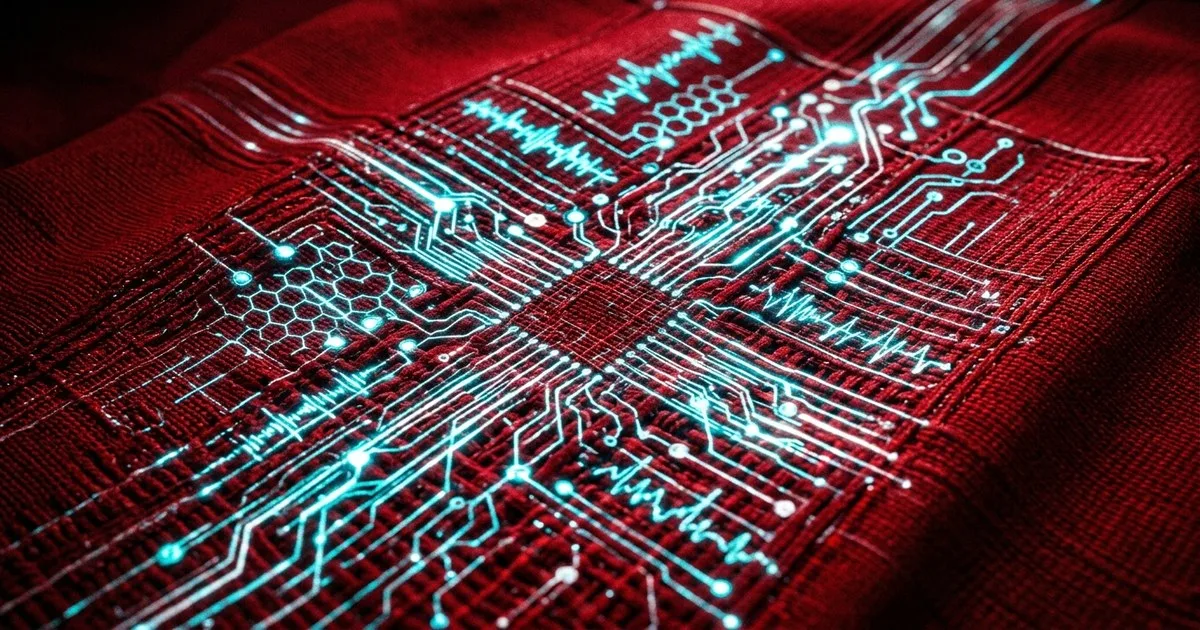
Fitness tech is no longer about selling stationary bikes to suburbanites; it is about the $3.6 billion that Crunchbase reports has flowed into AI and data-driven wellness in the first half of 2026. For your fashion brand, this shift signals a critical move away from wrist-based accessories toward "smart" textiles that require deep technical integration. You must pivot from simple athleisure to intelligent performance apparel to capture this new wave of investor interest.
Key takeaways
- Fitness and wellness startup funding hit $3.6 billion in H1 2026, a 33% increase over the same period in 2025.
- Investors are prioritizing AI inference and biometric data over traditional fitness hardware like treadmills.
- Technical breakthroughs in GPU efficiency now allow for real-time AI processing directly within garment sensors.
- Mainstream visibility for performance-driven fashion is peaking at high-profile lifestyle and media festivals.
- Activewear leaders like On are positioned to benefit from this renewed focus on high-performance technical gear.
Weekly Roundup: The Rebound in Real-Time
August 15, 2026: Performance Aesthetics Hit the Red Carpet At the Televerse Festival on August 15, 2026, the intersection of high-fashion and athletic influence was on full display as high-profile figures merged luxury silhouettes with performance-ready details August 15, 2026. This matters because it confirms that the "performance-glam" trend is moving from the gym to the highest levels of media visibility, creating a massive opening for brands to market smart wearables as luxury lifestyle items rather than just gym tools.
August 14, 2026: AI Infrastructure Scales for Wearables New reports on August 14, 2026, highlight a race to squeeze more power out of conventional processors to speed up AI inference August 14, 2026. For the fashion industry, this is the "missing link" for smart clothing. Faster, more efficient inference means your design teams can integrate complex AI feedback—like real-time posture correction or metabolic tracking—directly into a shirt or shoe without requiring a bulky battery pack or a constant smartphone connection.
August 14, 2026: The AI Funding Megadeal Context While fitness is rebounding, the broader AI infrastructure market saw massive capital injections this week, including a $5 billion round for data management firms on August 14, 2026 August 14, 2026. This flood of capital into AI infrastructure ensures that the backend tools needed to process wearable data will be cheaper and more accessible for fashion brands in the coming 18 months.
August 12, 2026: Fitness Funding Hits $3.6 Billion Startup investment in fitness and wellness reached $3.6 billion in the first half of 2026, putting the sector on track to finish the year 33% higher than the lows of 2025 August 12, 2026. Investors have officially tapped back in, but they are ignoring the "connected hardware" craze of the early 2020s in favor of software-heavy, data-first platforms that can be integrated into the clothes people already wear.
How is the $3.6 billion H1 2026 funding surge changing activewear?
The massive rebound in capital reported by Crunchbase on August 12, 2026, is not a return to the status quo. In 2025, funding hit a six-year low as investors soured on expensive, space-consuming home gym equipment. The 2026 surge is targeted specifically at companies that leverage AI to provide actionable health insights. For a brand like adidas, this means the competition is no longer just other footwear companies, but tech startups that can turn a standard running jersey into a medical-grade diagnostic tool.
You should view this funding as a signal to move R&D budgets toward "invisible" tech. The market is moving toward a future where the garment is the device. This requires a fundamental shift in how you approach the supply chain. As noted by Sourcing Journal, the integration of conductive fibers and sensors into traditional textile manufacturing remains a hurdle, but the startups receiving this new capital are the ones solving these production bottlenecks.
Why are investors ditching hardware for AI and data in 2026?
The shift identified on August 12, 2026, stems from a demand for lower friction and higher retention August 12, 2026. Hardware has high shipping costs, inventory risks, and high churn. AI and data services, however, offer recurring revenue and can be updated via the cloud. For fashion brands, this is a golden opportunity. You already have the distribution and the customer's body space; by partnering with or acquiring these newly funded AI startups, you can add a high-margin digital layer to your physical products.
Investors are now looking for "inference at the edge." This means the AI happens on the device (or in the shirt) rather than in the cloud. The technical breakthroughs reported on August 14, 2026, regarding GPU efficiency August 14, 2026 are what will make this possible. If your product team can implement these efficiencies, you can offer real-time coaching without the latency that killed earlier generations of smart apparel.
How should brands like On and adidas respond to these shifts?
For performance-focused brands like On, the strategy should be "integration over invention." You do not need to build your own AI models from scratch when billions of dollars are being poured into specialized startups. Instead, focus on how these sensors affect the drape, breathability, and washability of your signature fabrics.
adidas and other majors should look at the August 14, 2026, funding news as a shopping list for potential acquisitions or strategic partnerships. The goal is to move beyond the "connected shoe" gimmick and toward a holistic ecosystem where the apparel provides data that the brand's app uses to sell personalized training plans or specialized gear.
| Tech Category | Primary Investment Focus | Fashion Application | Limits |
|---|---|---|---|
| AI Biometrics | Real-time data inference | Posture-correcting shirts | High sensor cost |
| Smart Textiles | Conductive fiber durability | Integrated heart-rate sensors | Wash cycle limits |
| Data Platforms | Predictive health analytics | Personalized gear recommendations | Privacy regulations |
| Edge Computing | GPU efficiency for wearables | Real-time coaching in-ear/on-garment | Battery life |
What can go wrong in the rush to smart wearables?
Despite the $3.6 billion influx, the path to successful smart fashion is littered with failures. The primary risk is "feature creep"—adding sensors that consumers don't actually want or that make the garment uncomfortable. If a smart shirt from On feels less comfortable than a standard one, the tech won't save it.
Furthermore, the data privacy landscape is tightening. As you collect more biometric data, your brand becomes a custodian of sensitive health information. This requires a level of cybersecurity that most fashion brands are not currently equipped to handle. You must ensure that your tech partners have the infrastructure to manage this data securely, or you risk a PR disaster that could tank your brand equity.
FAQ
How much did fitness tech funding grow in 2026? According to Crunchbase, funding for fitness and wellness startups reached $3.6 billion in the first half of 2026. This represents a 33% increase compared to the same period in 2025, signaling a strong recovery for the sector after a multi-year slump.
Why is AI more important than hardware for wearables now? Investors are moving away from bulky hardware because it has high overhead and high churn. AI and data platforms offer better scalability and recurring revenue. For fashion, this means the value is in the "intelligence" the garment provides, not just the physical sensors themselves.
How do GPU improvements affect smart clothing? Recent breakthroughs in squeezing more inference out of processors August 14, 2026 allow for faster AI processing on smaller, more efficient chips. This makes it possible to embed real-time AI feedback into clothing without the need for large batteries or external devices.
Which brands are best positioned for this trend? Performance-driven brands like On and adidas are well-positioned because they already have the technical credibility and athlete partnerships needed to validate new biometric data tools in the eyes of the consumer.
Will smart clothing replace smartwatches? While smartwatches remain popular for general tracking, smart clothing offers more accurate biometric data (like muscle activation or lung capacity) because the sensors have more direct contact with the body. The trend is moving toward an ecosystem where both work together.
Further reading
- Sector Snapshot: Fitness Startup Funding Is Rebounding
- The Week’s 10 Biggest Funding Rounds
- Browzwear
- Marvelous Designer
- Optitex