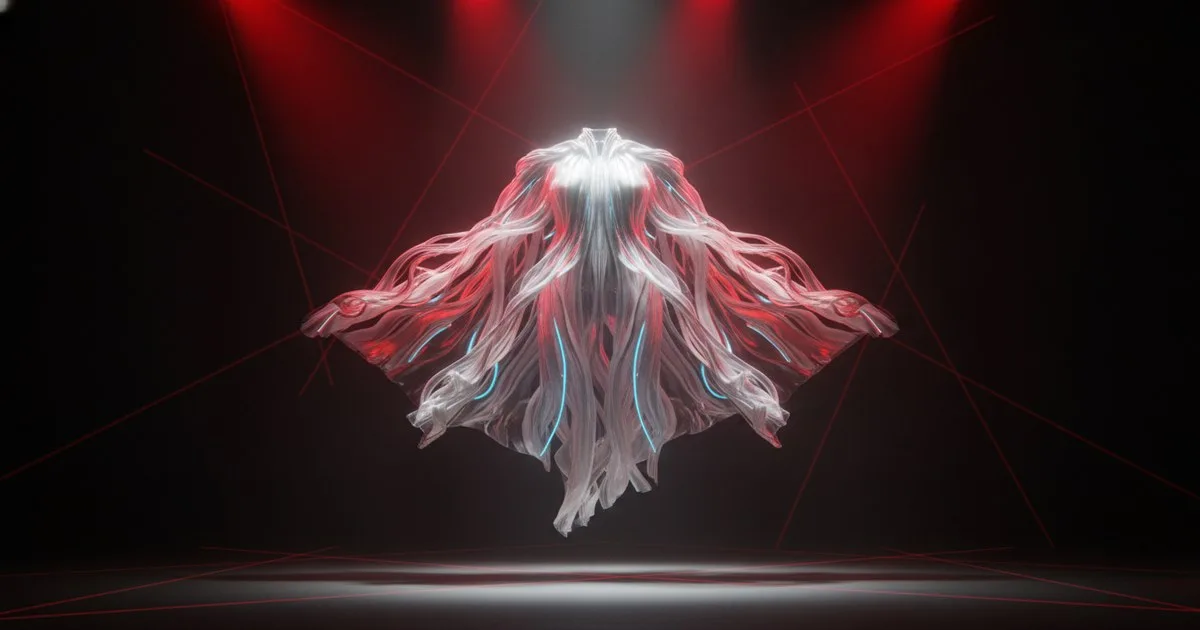
The Fabricant is a B2B AI design platform for fashion professionals—not the NFT-era digital fashion house it is still widely described as. The studio ships a subscription suite covering sketch-to-image rendering, generative editing, editorial photography, and e-commerce photo-studio output. The blockchain chapter is closed; the software chapter is very much open.
Key takeaways
- The Fabricant's current product is a subscription AI design suite aimed at fashion brands, not a digital-garment marketplace.
- The NFT and digital-ownership framing that defined its early reputation no longer describes what the business sells.
- Its stated next move is turning generated imagery into production-ready patterns—an EU-funded project is part of that push.
- Several well-funded rivals operate in the same AI-image space; the pattern-to-production question is where the field diverges most sharply.
- Key facts about paying customers, ownership structure, and pattern accuracy remain unverifiable from public sources.
What did The Fabricant become known for?
The studio launched in 2018 as a digital-only fashion house—no physical garments, no supply chain, no factories. It positioned digital clothing as a category in its own right: garments that existed as files, rendered with photorealistic precision, and worn in images rather than on bodies. That framing caught the cultural moment when NFTs and virtual worlds were pulling serious investment, and The Fabricant became the shorthand reference for anyone writing about digital fashion as a concept.
That reputation still follows the company in press coverage. It should not be taken as a description of what the business does today.
What does The Fabricant actually ship today?
The Fabricant now describes itself as an AI-powered design platform for independent designers and global fashion brands alike. The current product stack, drawn from its own published materials, includes:
- Sketch-to-image rendering — upload or draw a sketch, generate photorealistic garment visuals
- Generative image editing — modify colour, texture, silhouette on existing renders
- AI model generator — place garments on AI-generated figures for e-commerce
- Editorial and photo-studio output — campaign-ready imagery without a physical shoot
- Image upscaling and image-to-video animation — finishing tools for marketing use
The platform also includes a node-based workflow builder called Canvas, which lets users connect steps—sketch input, prompt, garment generation, virtual try-on—and run the full sequence in a single pass. The aesthetic is distinctly editorial: the output reads as fashion photography, not technical illustration.
The positioning is B2B subscription. The Fabricant's own site states it has been trusted by top brands since 2018, though it does not name paying customers publicly.
One thing the current product does not do: it does not output production-ready patterns or tech packs. That distinction matters for any buyer evaluating it against tools that do.
Where is The Fabricant heading next?
The clearest public signal is the pattern-and-production question. The Fabricant is part of an EU EIT Culture & Creativity funded project aimed at turning images into production-ready patterns, working with partners across European textile manufacturing. That project is the bridge between what the platform does now—generate compelling imagery—and what a production workflow actually requires: graded patterns, tech packs, and bills of materials.
The studio also runs a design competition for emerging AI-fashion talent. The first edition of Design Forward, held in 2026, drew entries from students at institutions including Kolding School of Design and Instituto Marangoni, with ten winners selected by an international jury. Competitions of this kind serve a dual purpose: community building and a pipeline of content that demonstrates the platform's range.
How does The Fabricant compare to other AI design tools in the market?
The Fabricant is not alone. Several well-funded tools occupy overlapping territory, and business buyers should map the field before committing.
Raspberry AI
Raspberry AI offers an end-to-end generative creative platform covering sketch-to-render, 3D avatar to photorealism, virtual try-on, print and graphic generation, lifestyle photography, multi-view output, and video studio. It positions itself as a unified system for design, product, and marketing teams from first sketch to final campaign. The company raised a $24M Series A to extend that vision. Best for: brands that want a single platform spanning design ideation through to campaign content. Limits: like The Fabricant, it is an image and creative tool—not a pattern-making or tech-pack system.
Vizcom
Vizcom is a web-based AI platform built for product designers: draw or import a sketch, generate 2D or 3D rendered designs, iterate with a team in shared workspaces. It raised a $27M Series B to push from visualisation into broader creative workflows. Best for: product design teams that need rapid sketch-to-render iteration and collaborative ideation. Limits: its roots are in industrial and product design broadly, not fashion-specific workflows.
Refabric
Refabric focuses on AI-powered sketch and CAD-to-imagery for fashion, with a positioning that sits between design tool and creative production platform. Best for: fashion design teams that want to move from technical drawings to visual outputs without a full photography budget. Limits: less publicly documented than the tools above; ownership and funding status are not confirmed in available sources.
DressX
DressX takes a different angle entirely. Its enterprise AI suite is built around photorealistic virtual try-on integrated into e-commerce product pages—conversion optimisation and return reduction, not design generation. Best for: brands that want to add try-on to their retail stack. Limits: not a design or pattern tool; it operates downstream of the creative process.
FashionINSTA
For a large enterprise that already holds a substantial archive of.DXF pattern files, FashionINSTA's private per-brand AI—trained on the brand's own pattern library in a tenant-isolated environment—converts that archive into production-ready patterns, tech packs, and 3D-compatible DXF outputs. It is not a concept-image or moodboard tool, and it does nothing useful for a studio that has no pattern archive to learn from—which means it occupies a different part of the workflow than The Fabricant, Raspberry AI, or Vizcom.
What is genuinely unclear about The Fabricant from public sources?
Several things that matter to a business buyer are not answerable from public information:
- Who is paying? The Fabricant says it is trusted by top brands but does not name them publicly. There is no verified customer list.
- Pattern accuracy. The EU-funded project targets production-ready patterns, but no independent assessment of output accuracy or production readiness is available.
- Ownership. The company's current ownership and cap table are not disclosed in any source reviewed for this profile.
- Pricing. Subscription tiers are not published in detail in available sources.
Any vendor evaluation that needs answers to these questions will require a direct conversation with the company.
FAQ
Is The Fabricant still an NFT company? No. The NFT and digital-ownership positioning defined its early years but no longer describes the product. It now ships a B2B AI design suite for fashion brands.
What does The Fabricant actually produce today? Sketch-to-image renders, generative editing, AI model photography, editorial and e-commerce imagery, and a node-based workflow builder. It does not currently output production patterns or tech packs.
Can The Fabricant replace a pattern maker? Not yet, based on public information. The pattern-to-production capability is listed as a direction, not a shipped feature. An EU-funded project is working toward it.
How does The Fabricant differ from Raspberry AI or Vizcom? All three generate design imagery from sketches or prompts. The Fabricant has a distinctly editorial aesthetic and a fashion-specific workflow; Raspberry AI covers a wider creative pipeline; Vizcom has broader product-design roots.
Which AI tool is right for a large fashion brand with an existing pattern archive? That depends on the use case. For concept imagery and editorial content, The Fabricant and Raspberry AI are the relevant options. For converting an existing.DXF pattern archive into production-ready outputs, that is a different category of tool altogether.
Further reading
- EU funds AI project to strengthen Europe's fashion production
- AI Fashion Workflow Software: Automate Sketch to Photoshoot
- The Fabricant announces winners of AI Design Forward 2026
- Raspberry AI
- Vizcom
- Browzwear
- Marvelous Designer
- Refabric
- DressX
- Optitex
- FashionINSTA